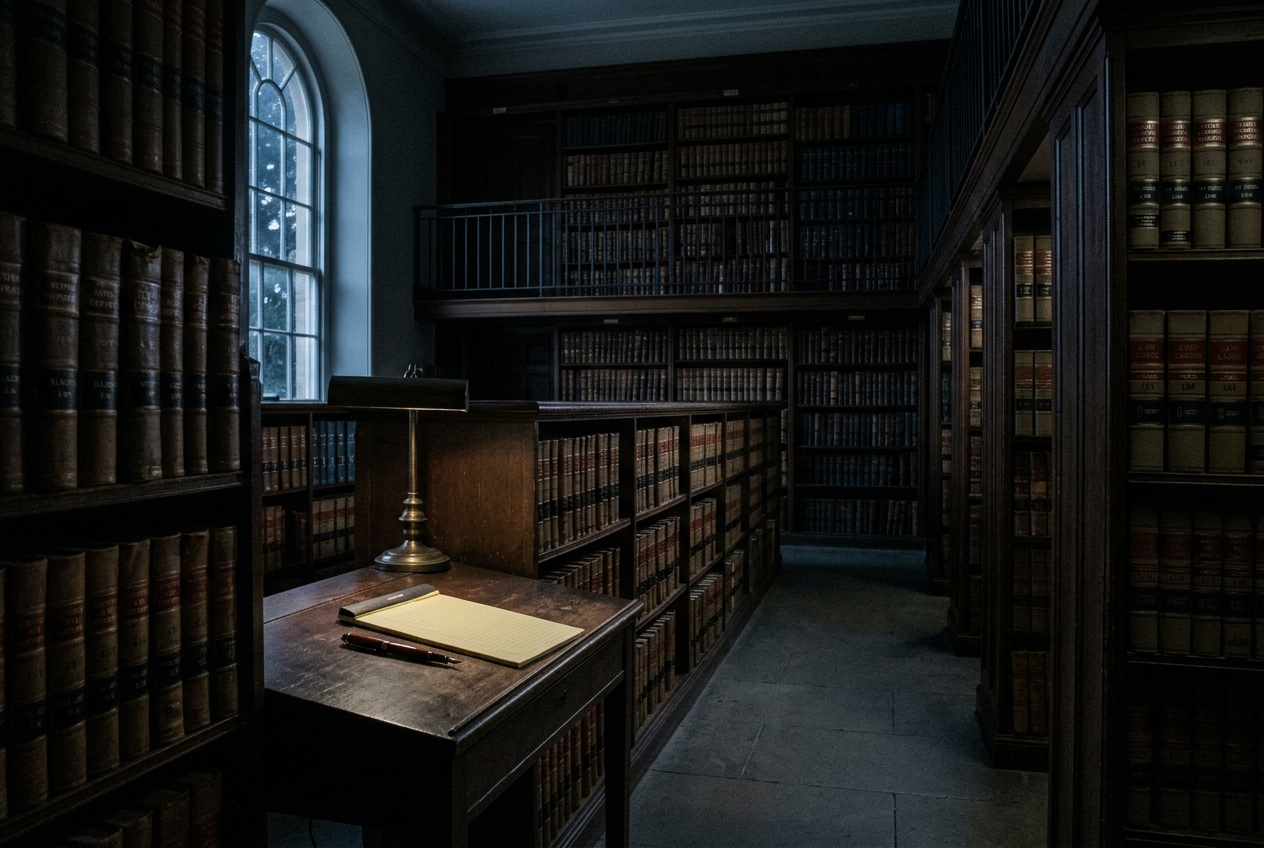
The Silence Beneath the Brief: Finding Analytical Clarity Amidst 24/7 Digital Legal Demands
Written by The Pilgrim ·
Blaise Pascal, the seventeenth-century mathematician and philosopher, wrote something that might sting a modern lawyer: 'All of humanity's problems stem from man's inability to sit quietly in a room alone.' He was not speaking of idleness or neglect. He was diagnosing a hunger, present even in his own time, to escape the discomfort of solitude and unstructured thought. Yet Pascal's observation carries a particular weight now, in an era when silence has become not merely uncomfortable but nearly impossible to defend. A solicitor in a deal room, a barrister preparing written submissions, an in-house counsel navigating a compliance matter, each faces a stream of messages, notifications, and urgent requests that arrives without pause. The expectation is one of immediate availability, immediate response, immediate clarity. And yet, paradoxically, it is precisely in moments of silence and solitude that the deepest analytical clarity emerges.
Consider the predicament with fresh eyes. When does genuine understanding of a complex legal problem actually arrive? Is it during the meeting where options are debated in real time? Is it whilst drafting furiously to meet a deadline? Or does it come, more often than we care to admit, in the quiet hour before sitting down to write, when the mind is allowed to wander without agenda or external interruption? There is a growing body of research in cognitive science that lends surprising credibility to Pascal's intuition. Neuroscientists have identified what is called the default mode network, a constellation of brain regions that activate when we are not focused on any external task. This network appears to be crucial for creative problem solving, for making unexpected connections between disparate ideas, for incubation, as psychologists term it, the unconscious processing that often precedes genuine insight. When we force ourselves into constant external focus, constantly responding to demands, this network is suppressed. The analytical work continues, but it is a narrower, more linear form of analysis.
Legal practice has not always been deaf to the value of quietude. The classical tradition of slow reading offers a counterpoint to the fragmented attention that now dominates professional life. When a medieval scholar or Renaissance humanist encountered a difficult text, the reading was intentional, unhurried, often solitary. The same passage might be read multiple times. Marginal notes accumulated. The mind moved at the pace of genuine comprehension. This mode of engagement bears little resemblance to the way many lawyers now encounter their briefs: skimming on screen between messages, annotating hastily, moving swiftly to the next task. Yet the complexity of modern law demands precisely the kind of careful attention that slow reading cultivates. A statute's real implications often reveal themselves only on the second or third careful reading. A bundle of case authorities begins to show its true structure only when examined without the pressure of clock and email.
Subscribe free to keep reading
Subscribe with your email to read every article, listen to the audio and use the libraries. Already a subscriber? Enter your email once on this device and everything opens.
No spam. No sales. No credit card.
By subscribing you agree to receive the BWGELA newsletter. You can unsubscribe at any time.
Have an account?
BWGELA, in the spirit of OER, grants the Creative Commons Licence CC BY-NC-SA 4.0 to the reader, to include the attribution: ‘The Silence Beneath the Brief: Finding Analytical Clarity Amidst 24/7 Digital Legal Demands’ scripted by the Pilgrim BWGELA @ www.bwgela.com 2026.