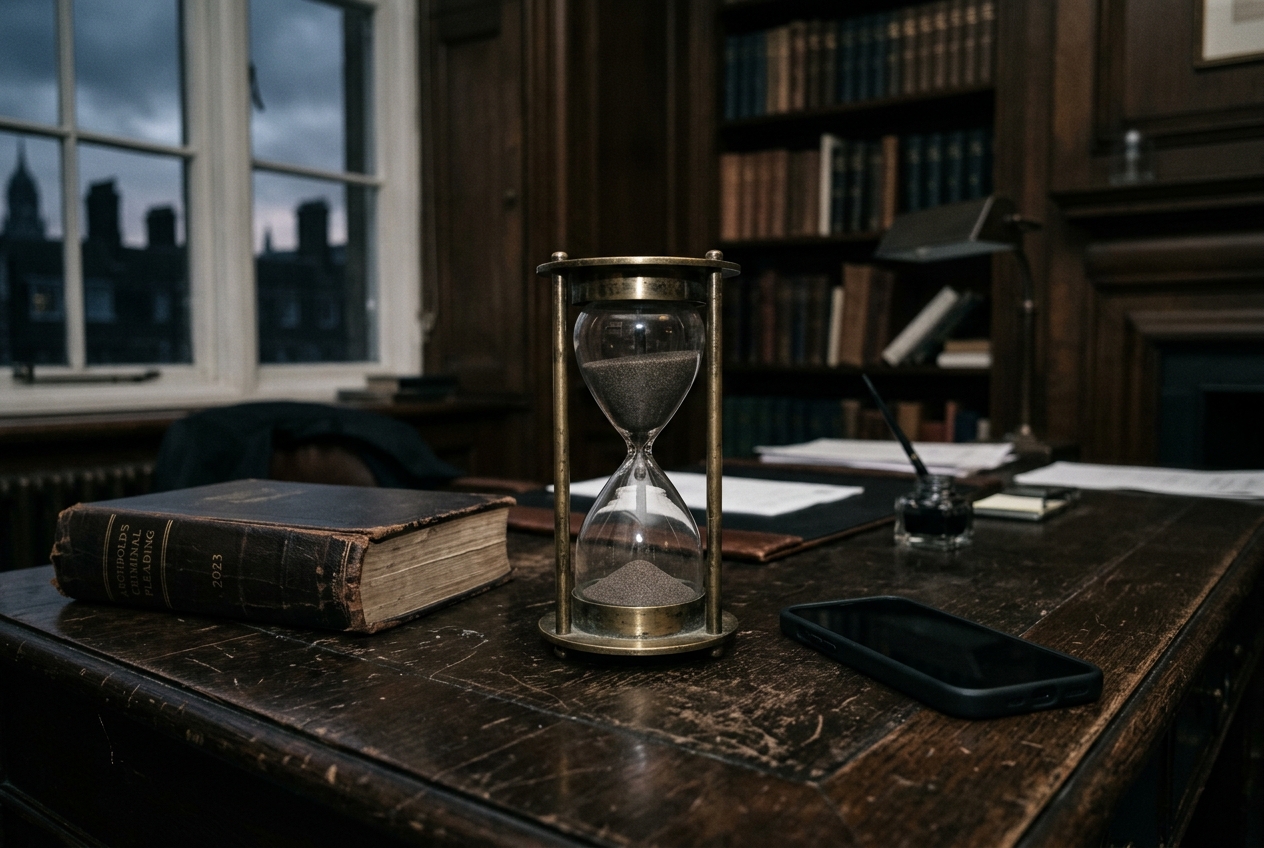
The Deliberate Pause: Why Slowing Down is a Legal and Professional Necessity in the Fast-Paced Digital Era
Written by The Pilgrim ·
The senior associate sat in the dim glow of her screen at half past nine in the evening, her finger hovering over the send button. The client had posed a complex question about regulatory interpretation three minutes earlier. Around her, the office was quiet, but the messaging platform glowed with an urgent red circle. To wait would be to appear slow. To answer without proper thought would be to risk poor counsel. She paused. And in that pause lay the entire ethical crisis of modern legal practice.
We live in an age of perceived instantaneity. The technology that was meant to liberate lawyers from the office has instead colonised their minds. Instant messaging applications, email marked urgent, client portals that refresh by the second, and now the seductive hum of artificial intelligence systems that can draft documents in seconds, all conspire to compress the temporal space available for proper thought. Yet the law, perhaps more than any other profession, has always demanded slowness. The duty of care, the duty of competence, the sacred obligation to serve the client's true interests rather than their apparent wants all require one thing that modern practice seems determined to deny: time.
Daniel Kahneman, the psychologist and economist, has given us a useful framework for understanding this tension. He describes two systems of thinking. System One is fast, intuitive, and automatic. It is the mind's snap judgement, its pattern recognition, its immediate response. System Two is slow, deliberate, and analytical. It requires effort and focus. It is the province of careful reasoning, of weighing evidence, of acknowledging uncertainty. Much of what a lawyer must do belongs to System Two. Yet the architecture of modern practice has been designed to reward System One. The lawyer who answers fastest, who closes deals swiftly, who keeps the client happy through responsiveness, appears successful. The lawyer who pauses to think has, to the anxious client's eye, become an impediment.
Subscribe free to keep reading
Subscribe with your email to read every article, listen to the audio and use the libraries. Already a subscriber? Enter your email once on this device and everything opens.
No spam. No sales. No credit card.
By subscribing you agree to receive the BWGELA newsletter. You can unsubscribe at any time.
Have an account?
BWGELA, in the spirit of OER, grants the Creative Commons Licence CC BY-NC-SA 4.0 to the reader, to include the attribution: ‘The Deliberate Pause: Why Slowing Down is a Legal and Professional Necessity in the Fast-Paced Digital Era’ scripted by the Pilgrim BWGELA @ www.bwgela.com 2026.