Mono no Aware: The Gentle Sadness of Impermanence
Written by The Pilgrim ·
What might we gain if we learned to love the world precisely because it will not stay? Can beauty be deepened by the knowledge that it must end, and if so, what does that tell us about the nature of attention itself? These are not merely aesthetic questions; they reach into the very core of how a person chooses to live, what a person notices, and what a person is willing to feel.
There is a concept in Japanese culture, ancient in its roots yet startlingly immediate in its reach, that attempts to name something most of us have felt but rarely had the courage to sit with. Mono no aware, which translates loosely as the pathos of things or the gentle sadness of passing moments, describes a tender, bittersweet attentiveness to the transience of all that exists. It is not grief, precisely, though grief is its near neighbour. It is not mere melancholy, though melancholy runs quietly through it. It is something closer to a grateful ache, a recognition that the beauty of a thing and the brevity of that thing are not in opposition but are, in fact, inseparable.
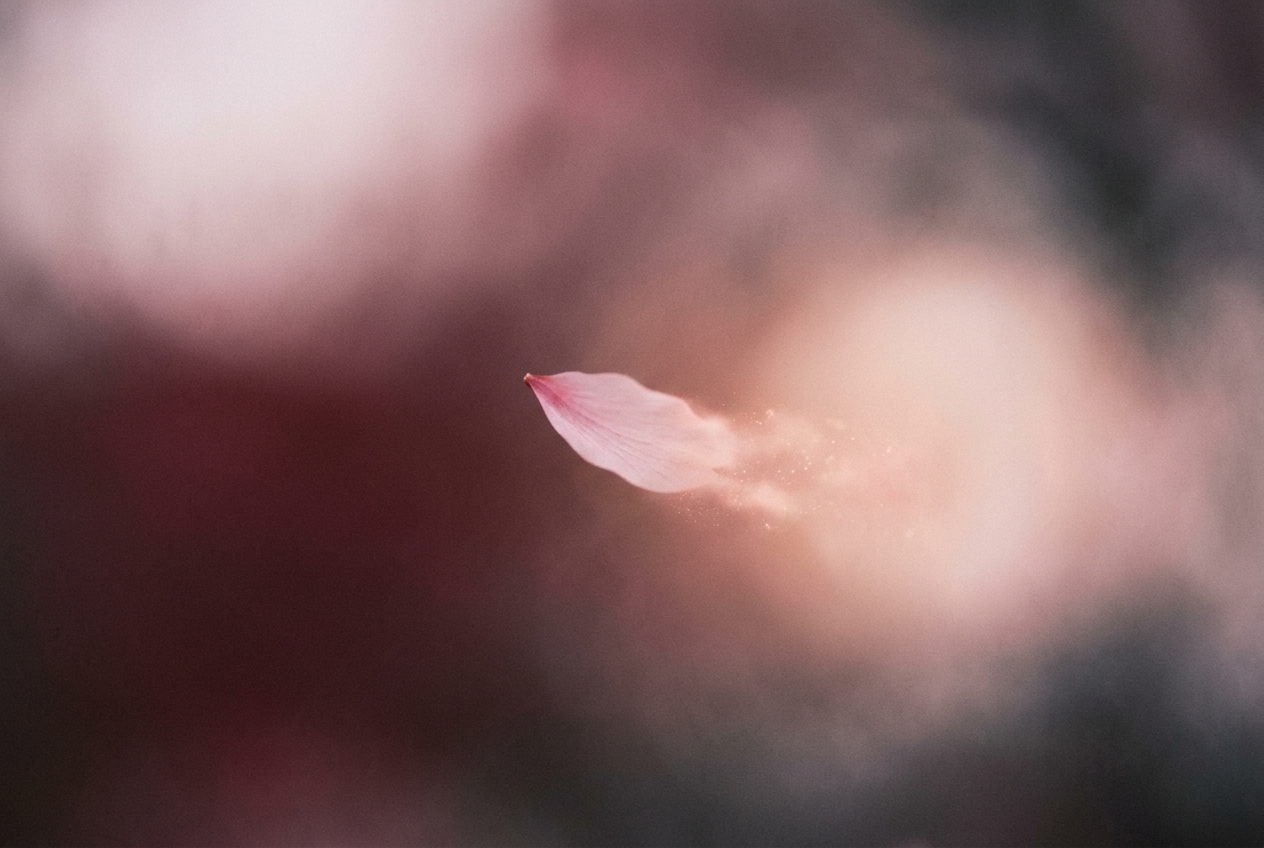
The image most commonly associated with mono no aware is the cherry blossom. Each spring in Japan, the sakura blooms for a period of only one to two weeks before the petals begin to fall. What is remarkable is not simply that the Japanese celebrate this event, but how they celebrate it. There is a practice called hanami, the deliberate act of sitting beneath the blossoming trees, watching, eating, drinking tea or sake, and being present to a beauty that everyone in attendance knows will not last. The falling petal is not a disappointment; it is the whole point. The Japanese philosopher Motoori Norinaga, writing in the eighteenth century, placed the cherry blossom at the heart of Japanese sensibility for precisely this reason. He argued that the heart of things, the aware, is most fully felt when one is confronted with something beautiful that is already, in the moment of its beauty, in the process of leaving.
Western aesthetic traditions have not, on the whole, made peace with this idea. There is a persistent tendency in Western thought to seek permanence, to build monuments, to preserve, to archive, to resist loss by turning the temporary into the eternal. We write biographies so that a life will not be forgotten. We restore old paintings so that colour will not fade. We take photographs at the very moment we feel most intensely, as if freezing the moment will allow us to keep it. All of this is understandable, deeply human even, yet one wonders whether this constant reaching for permanence prevents a certain quality of attention. If we are always trying to save the moment, are we truly inside it?
Mono no aware asks us to consider a different orientation. Rather than resisting transience, it invites us to let transience deepen our looking. When a person knows that the blossom will fall within the week, they look at it differently than they would if they believed it would bloom all summer. The limited time does not diminish the beauty; it concentrates it, makes it luminous. This is not a passive resignation. It is a radical form of presence, a discipline of attention that requires one to relinquish the comforting fiction that this moment will somehow persist.
Literature and art shaped by this sensibility carry a particular quality. The medieval Japanese literary form of the zuihitsu, the discursive, wandering essay of observation and reflection, often turns on moments of exactly this kind. The writer Sei Shonagon, compiling her celebrated pillow book in the tenth century, catalogued moments of fleeting loveliness with a precision that itself enacts mono no aware. She did not mourn the passing of these moments; she honoured them by seeing them clearly. The sadness and the beauty arrive together, held in the same breath.
One might ask whether this sensibility risks becoming indulgent, a sophisticated form of sorrow that aestheticises loss rather than doing anything about it. It is a fair challenge, and it deserves a genuine answer. Mono no aware is not an invitation to passivity or world-weariness. It does not counsel us to stand apart from life in a posture of refined melancholy. On the contrary, it demands full engagement, because to feel the sadness of passing is already to have loved what passes. The person who feels nothing when the blossom falls has not transcended attachment; they have simply not been present enough to attach. The ache of aware is proof of contact with the world.
There is also something profoundly ethical in this orientation. When we truly absorb the impermanence of things, we begin to treat them differently. We become less careless, less casual, more capable of tenderness. A friendship understood as finite becomes more precious, not less. A landscape known to be changeable becomes more worthy of care. The awareness of loss, held not as paralysing anxiety but as a quiet undertone to daily experience, can make a person more alive to what they have and more generous in how they hold it.
Rhetoric and philosophy have long concerned themselves with how we frame the world we inhabit, with what lenses we bring to experience and what those lenses allow us to see or prevent us from seeing. Mono no aware offers a lens that is unusual in its combination of honesty and tenderness. It does not pretend that things last. It does not offer consolation by minimising loss. It says, instead, that the loss is real, the beauty is real, and that these two realities do not cancel each other out but illuminate one another.
Perhaps the question worth returning to is this: what would change in a life if impermanence were received not as a wound but as an invitation? If every cherry blossom, every friendship, every ordinary Tuesday afternoon were held with the kind of attention that knows it will not come again, what quality of living might become possible? The blossoms are already falling. The question is whether we are truly there to watch them go.
BWGELA, in the spirit of OER, grants the Creative Commons Licence CC BY-NC-SA 4.0 to the reader, to include the attribution: ‘Mono no Aware: The Gentle Sadness of Impermanence’ scripted by the Pilgrim BWGELA @ www.bwgela.com 2026.