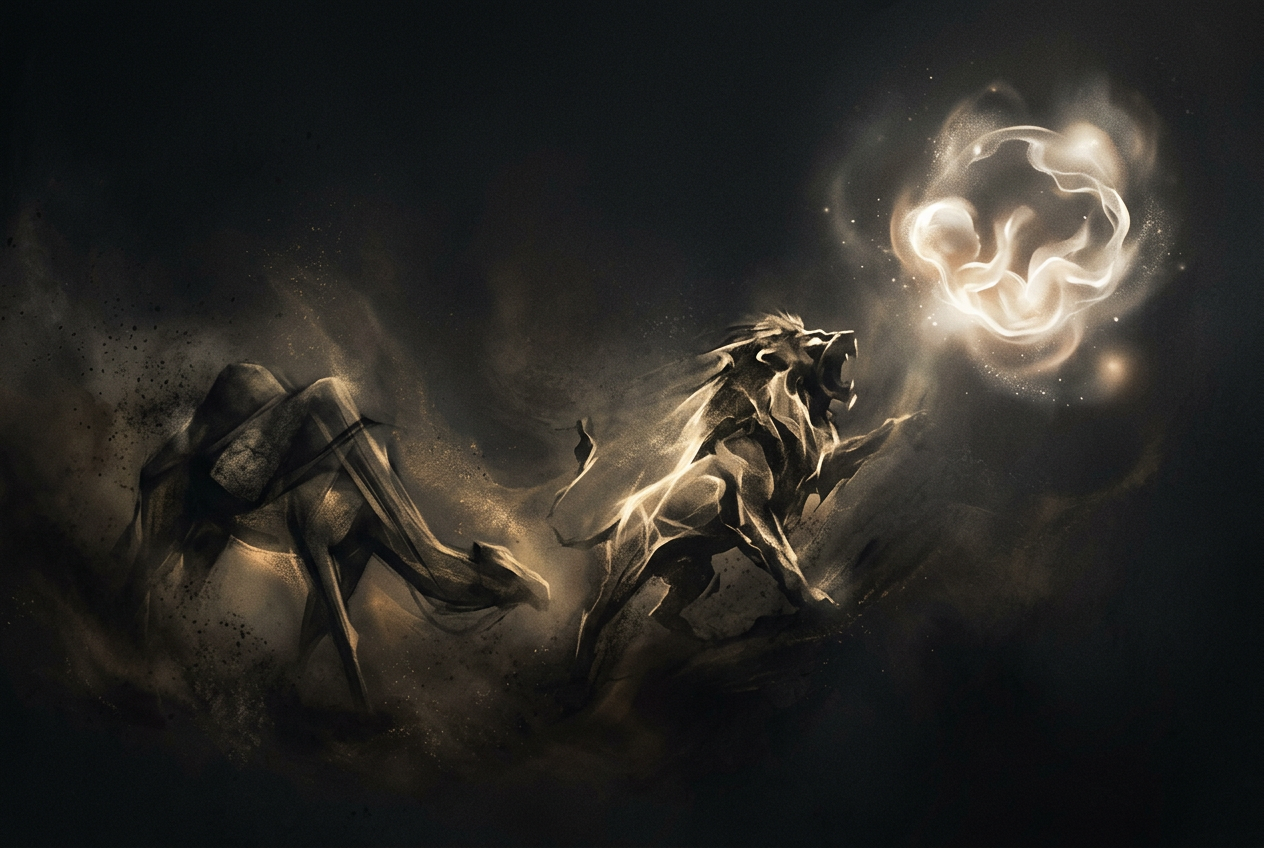
Camel, Lion and Child: Lessons from Nietzsche
Written by The Pilgrim ·
Friedrich Nietzsche’s allegorical framework in "Thus Spoke Zarathustra," particularly the sections known as "The Camel, the Lion, and the Child," offers profound insights into the stages of personal development and the evolution of the human spirit. Nietzsche uses these three symbols to represent different phases in the journey toward self-realisation and the embrace of one’s true potential. By examining these archetypes, we can glean valuable lessons about growth, transformation, and the pursuit of authenticity.
The first stage, represented by the Camel, embodies the qualities of endurance, strength, and the capacity to bear burdens. The Camel symbolises the individual who accepts societal norms, moral obligations, and the weight of tradition. This phase is characterised by a sense of duty and responsibility, where one learns to navigate the external pressures of life. While this stage is crucial for building resilience, Nietzsche suggests that remaining in the Camel phase can lead to stagnation, as it often involves blind adherence to established values without questioning their validity.
The lesson here is that while it is essential to develop the ability to endure hardships and fulfil responsibilities, one must eventually confront the limitations of this phase. Nietzsche challenges us to reflect on the burdens we carry and to question whether they serve our authentic selves or simply conform to societal expectations. Growth begins when we recognise that we have the power to redefine our values and reshape our identities.
The second stage, represented by the Lion, signifies the emergence of strength and the will to assert oneself. The Lion symbolises the courageous individual who confronts and challenges existing values, embodying the spirit of rebellion and self-assertion. This phase is marked by a struggle against external constraints and an awakening of personal power. The Lion’s roar represents the rejection of imposed beliefs and the desire to create one’s own path.
From the Lion, we learn the importance of asserting our individuality and standing up against oppressive systems. This stage encourages us to embrace our inner strength, to challenge the status quo, and to cultivate a sense of agency in our lives. However, Nietzsche warns that the Lion phase, while empowering, can also lead to a cycle of conflict and aggression if one becomes too fixated on destruction without a constructive vision for the future.
The final stage, represented by the Child, embodies innocence, creativity, and the ability to envision new possibilities. The Child symbolises a return to a state of wonder and playfulness, where one can imagine and create without the constraints of societal expectations. This phase is characterised by the ability to embrace new beginnings and to approach life with a sense of curiosity and openness.
The lesson of the Child is perhaps the most profound: it encourages us to cultivate creativity and spontaneity in our lives. By embracing the qualities of the Child, we can transcend the burdens of the Camel and the conflicts of the Lion, allowing us to create a life that is authentic and fulfilling. Nietzsche suggests that true greatness lies in our ability to integrate these stages, using the strength of the Lion to break free from constraints while nurturing the creativity and joy of the Child.
In conclusion, Nietzsche’s "Camel, Lion, and Child" offers a compelling framework for understanding personal growth and the journey toward self-actualization. By recognising the importance of endurance, self-assertion, and creative freedom, we can navigate our paths with greater awareness and intention.
Embracing these stages allows us to cultivate a richer, more authentic existence, ultimately leading to a life that reflects our true selves. Nietzsche’s allegory serves as a powerful reminder that the journey of becoming is as important as the destination itself, urging us to embrace each phase with courage and curiosity.
Questions to Ponder
- 1.
Which burdens in your life do you carry out of genuine responsibility, and which ones might you be carrying simply because you have never questioned their necessity?
- 2.
When you challenge the status quo, how can you ensure you are creating something meaningful rather than merely reacting against what already exists?
- 3.
If true growth requires integrating the Camel, Lion, and Child, what prevents most people from advancing beyond the stage where they currently feel most comfortable?
- 4.
How might societies that valorise only the Lion stage of rebellion actually inhibit the kind of creative flourishing that Nietzsche associates with the Child?
or to write private answers and keep them in My Journal.
BWGELA, in the spirit of OER, grants the Creative Commons Licence CC BY-NC-SA 4.0 to the reader, to include the attribution: ‘Camel, Lion and Child: Lessons from Nietzsche’ scripted by the Pilgrim BWGELA @ www.bwgela.com 2026.